
Hot keywords:Dongguan laser welding machine Automatic laser welding machine Laser welding machine manufacturers
Welcome to Dongguan zx laser Technology Co., Ltd. official website!





In sheet metal fabrication, stainless steel products, and hardware processing, many factories still rely on TIG (argon arc) welding and face pain points such as difficulty recruiting workers, severe part distortion, heavy grinding workload, and low efficiency. A growing number of enterprises are switching to fiber laser welding machines to replace traditional TIG welding, improving quality while reducing costs. Drawing on a large number of real customer cases, Zhengxin Laser compares the two welding processes below to provide a reference for fabrication shops selecting equipment.
Traditional TIG welding depends heavily on the welder’s experience: welding speed is slow, heat input is high, thin workpieces are prone to distortion, and rough weld seams require extensive grinding and polishing, driving up labor costs. Meanwhile, skilled welders are scarce and wages keep rising year by year, making production stability difficult to guarantee. In contrast, fiber laser welding machines perform non-contact welding with high energy density and faster welding speed; for the same workpiece, laser welding can be several times as efficient as TIG welding.
Laser welding produces a small heat-affected zone, so thin sheets are less likely to deform. The weld seam is narrow, uniform, and smooth; many workpieces need only simple post-weld treatment or even no grinding at all, substantially saving finishing labor. The equipment is easy to operate with preset standardized parameters, allowing new operators to get started after short-term training, so production no longer relies entirely on senior welders and eases staffing pressure.
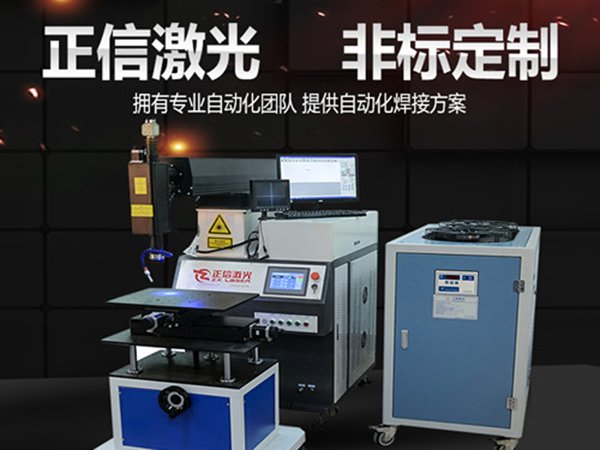
Laser welding offers broader material compatibility: stainless steel, carbon steel, galvanized sheet, and aluminum alloy can all be welded, and reliable joining of some dissimilar metals is also achievable. Zhengxin Laser’s fiber laser welding machines are available in handheld and automated versions. Small workshops and sheet metal shops can choose handheld models; for high-volume standardized workpieces, machines can be paired with robotic arms to form automatic welding workstations.
Zhengxin Laser offers trial welding on customer samples, so customers can compare the finished results of laser welding and TIG welding side by side. Based on the customer’s sheet material, output volume, and available space, the company recommends a suitable power-rated model, along with full operation training and after-sales support. As manufacturing competition intensifies, upgrading to laser welding machines is an effective path for hardware and sheet metal factories to strengthen their competitiveness.